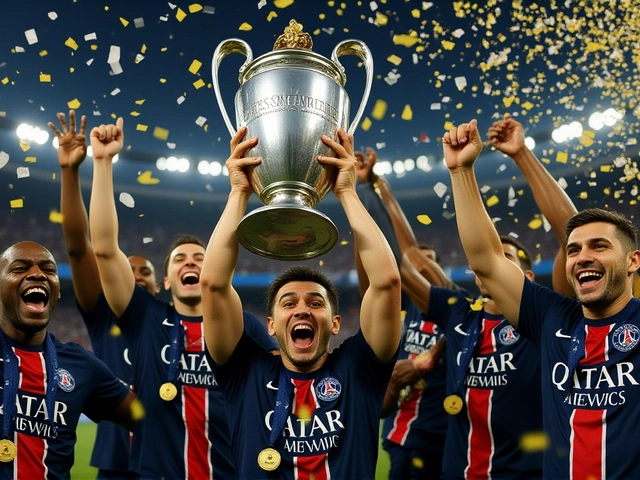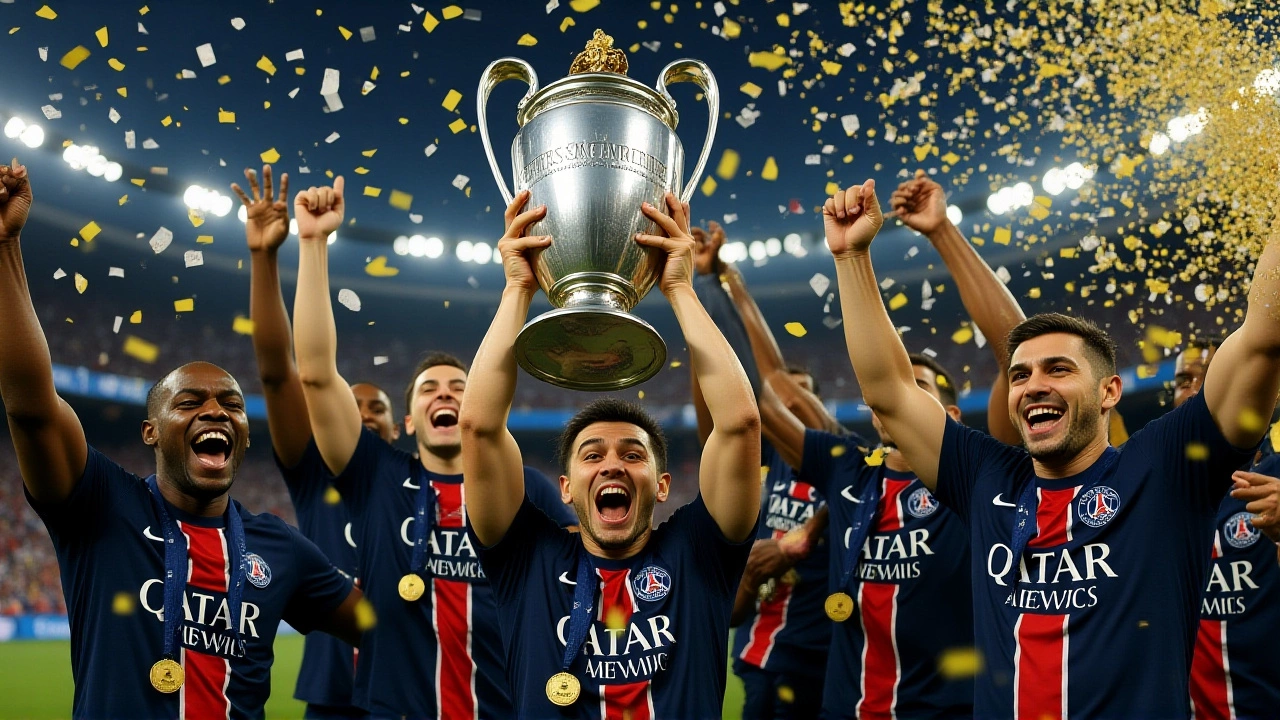
When Paramount+ unveiled its £1.05 billion deal for UK broadcast rights to the UEFA Champions League United Kingdom on November 21, 2025, football fans didn’t just get a new streaming option—they got a seismic shift in how they’ll watch Europe’s most glamorous club competition. The announcement, confirmed by UC3 (the joint venture between UEFA and European Football Clubs), marks the end of a ten-year era for TNT Sports, the London-based broadcaster that’s been the home of Champions League football since 2015. And it’s not just a change in channel. It’s a change in culture.
The End of an Era for TNT Sports
For over a decade, TNT Sports—a partnership between BT Group plc and Warner Bros. Discovery Inc.—built its identity around Champions League nights. Think late Wednesday kicks, the roar of Anfield echoing through living rooms, and those iconic opening sequences that made even a 2-2 draw feel like a final. But after a £917 million contract expired, the math didn’t add up anymore. In a terse statement, TNT Sports CEO Allison Kirkby said, “Ultimately we remained committed to the approach that made financial sense for our business, and for our customers.” No drama. No tears. Just cold, hard business.That doesn’t mean they’re walking away from football. Far from it. TNT Sports still holds the Premier League, the newly acquired Emirates FA Cup, and the Adobe Women’s FA Cup. But Champions League? That’s a different beast. The price tag for the next cycle? Over £1 billion. And Paramount+ didn’t blink.
Paramount+ Enters the Arena
Based at 1515 Broadway in New York City, Paramount Global isn’t just a streaming service—it’s a global media empire. With Channel 5 already in the UK, this deal feels less like an invasion and more like a homecoming. The company’s UK subscription will cost £4.99 per month, accessible via web, Sky, or Amazon Prime. But here’s the catch: you’ll still need Amazon Prime Video to watch Tuesday night games. And if you want highlights? The BBC keeps those. Sky Sports? They’re doubling down on the Europa League and Conference League.So now, to watch every Champions League match in full, a UK fan might need three subscriptions. Three. That’s not convenience—it’s fragmentation. And it’s exactly what UEFA wanted. The governing body’s revenue from broadcasting is jumping from £917 million to over £1 billion—a £83 million+ increase in just one cycle. That’s money that flows directly into clubs, especially those outside the traditional elite. Think Rangers, Feyenoord, or even a surprise qualifier like Slovan Bratislava.
A Global Pattern, Not a UK Anomaly
This isn’t just a British story. It’s part of a continent-wide realignment. In Germany, Paramount+ is replacing DAZN. In Spain, Telefónica locked in a €1.464 billion deal with Movistar Plus+. France? Still with Canal+. Italy? Sky Italia keeps its 184 matches. Meanwhile, in the U.S., Paramount+ is paying €1.3 billion for rights through 2030.What’s clear? The Champions League isn’t just a tournament anymore—it’s a global media product. And the buyers? They’re not traditional TV networks. They’re tech-first platforms with data, algorithms, and global audiences. The CBS Golazo show, hosted by Thierry Henry, Jamie Carragher, and Micah Richards, isn’t just commentary—it’s branding. It’s making Champions League feel like a premium event, not just another match.
What Comes Next? The Viewer’s Dilemma
The transition period runs from now until September 13, 2027, when the 2027-2028 season kicks off. That’s 20 months to rewire how millions of fans consume football. Will Paramount+ bundle with Sky? Will Amazon offer a discounted combo? Will the BBC extend highlights to include extended goals and tactical breakdowns? The details are still murky.One thing’s certain: casual fans might drop out. Why pay for three services just to watch one competition? Meanwhile, hardcore supporters will pay whatever it takes. And that’s the real tension here. The Champions League is becoming a luxury product. The more exclusive it gets, the more it risks becoming a club for the wealthy—not the fans.

Why This Matters Beyond the Screen
This isn’t just about who broadcasts the game. It’s about who gets to shape the narrative. When Paramount+ controls the feed, they control the commentary, the replays, the ads, even the timing of commercial breaks. That power used to sit with the BBC, ITV, or BT Sport. Now it’s in New York. And while the quality of coverage may improve, the cultural connection? That’s harder to measure.UEFA’s strategy is clear: monetize aggressively, globalize relentlessly. But the human cost? That’s still being calculated. Will children in Manchester grow up knowing the Champions League only through a subscription login? Will pubs stop showing the games because the cost is too high? These aren’t hypotheticals—they’re looming realities.
Frequently Asked Questions
How will this affect UK football fans’ viewing habits?
UK fans will need at least two subscriptions—Paramount+ for most matches and Amazon Prime Video for Tuesday nights—to access full Champions League coverage. The BBC will still offer highlights, but live action is now paywalled. This could push casual viewers away, especially households already juggling multiple streaming services. Analysts estimate up to 15% of previous viewers may cut back due to cost.
Why did TNT Sports lose the rights?
TNT Sports’ previous £917 million deal was nearly saturated. With Paramount+ offering over £1 billion, the gap was too wide to ignore. Unlike streaming giants with global subscriber bases and ad-tech leverage, TNT’s revenue is tied to UK pay-TV subscriptions, which have been declining. Their decision reflects a broader industry trend: traditional broadcasters can’t match the scale of global tech platforms.
Will this change how the Champions League is produced?
Yes. Paramount+ brings its U.S. production model to the UK, including the popular CBS Golazo show with Thierry Henry and Jamie Carragher. Expect more in-depth analysis, behind-the-scenes access, and interactive features like multi-camera angles and real-time stats. The production budget per match is expected to rise by 20-30%, enhancing quality but also deepening the premium feel.
What does this mean for smaller clubs in the Champions League?
UEFA’s increased revenue—over £1 billion—is distributed based on performance and market size, meaning clubs from smaller nations get a bigger slice. A team like FC Copenhagen or AZ Alkmaar could earn an extra £5-10 million just for reaching the group stage. That’s transformative for budgets, youth academies, and infrastructure. The trade-off? More exposure for elite clubs, but a higher barrier to entry for fans.
Is the Champions League final going to be free-to-air?
UEFA has not confirmed any change to the final’s broadcast model. Historically, it’s been shown on free-to-air TV in many countries, including the UK. But with Paramount+ controlling the primary rights, pressure is mounting to make the final exclusive. Fans are watching closely—this could become the defining flashpoint of the new era.
How does this compare to previous broadcasting deals in the UK?
The previous deal with BT Sport (now TNT Sports) was £917 million for 2015-2027. This new £1.05 billion deal for 2027-2031 represents a 14.5% increase over the same period, but inflation-adjusted, it’s actually a modest rise. What’s changed is the buyer: from a telecom-driven broadcaster to a global streaming giant. The value isn’t just in the money—it’s in the data, reach, and marketing power Paramount+ brings.